168.223 Router Configuration Guide
The 168.223 Router Configuration Guide clarifies the device’s role in directing traffic between local devices and external networks. It outlines a methodical approach to topology, interfaces, and connected subnets. The document establishes an initial security baseline, including administrative access controls and SSH enablement, while detailing default interfaces and baseline firewall rules. It emphasizes discipline in security and maintenance, with notes on QoS, firmware management, and structured troubleshooting. A pivotal point invites further consideration of practical implementation and long-term reliability.
How to Identify Your 168.223 Router’s Role in the Network
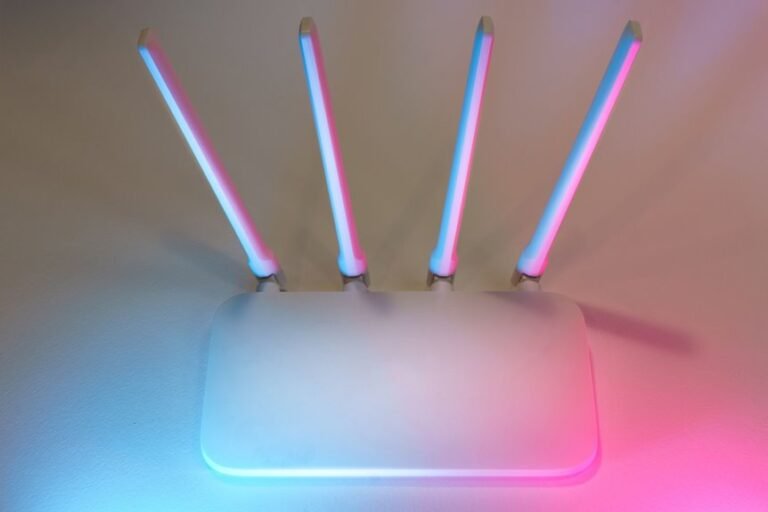
A router labeled 168.223 typically serves as an intermediary device that directs traffic between local devices and external networks. It analyzes traffic patterns, reveals network topology, and clarifies device roles within the infrastructure. By examining routing tables, interfaces, and connected subnets, administrators determine function—edge, core, or access—enabling freedom through disciplined, precise network management.
Step-by-step Setup: Initial Configuration and Security Baselines
Initial configuration of a 168.223 router establishes a secure baseline by outlining core device parameters, administrative access controls, and default network interfaces. The procedure enumerates initial credentials, management VLANs, and SSH enablement, then applies baseline firewall rules. Two word discussion ideas offered: color schemes, branding guidelines. This detached, precise approach supports disciplined deployment while preserving freedom to adapt settings responsibly.
Optimize Performance: Wireless, QoS, and Firmware Best Practices
Effective performance for a 168.223 router hinges on coordinated optimization across wireless settings, QoS policies, and firmware posture. The piece emphasizes disciplined performance tuning across radio bands, channel selection, and power, paired with deterministic QoS rules for priority traffic. It also prescribes disciplined firmware management practices to minimize risk, ensure compatibility, and sustain stable throughput and security.
Troubleshooting and Maintenance: Common Issues and Proactive Checks
Proactive maintenance and systematic troubleshooting are integral to sustaining reliable operation of the 168.223 router, complementing the prior focus on performance optimization. The section outlines common issues, diagnostic steps, and proactive checks, emphasizing documented processes. It debunks troubleshooting myths, reinforces disciplined maintenance rituals, and details logs, backups, and verification procedures to ensure stability, security, and predictable network behavior.
Frequently Asked Questions
How to Reset the 168.223 Router to Factory Defaults?
To reset the 168.223 router to factory defaults, follow documented steps: perform a hard reset, restore firmware to default, then reconfigure. After reset, set a new reset password and, if needed, apply a firmware upgrade for stability.
Can I Enable Guest Network Isolation on 168.223?
Yes, it enables guest isolation by configuring the guest network settings; the router firmware updates should be checked and applied first to ensure compatibility, then the isolation option is enabled and tested for traffic separation and security.
What Parental Controls Are Available on 168.223?
Parental controls overview: the 168.223 system offers robust options, including content filtering options and time-based access. Approximately 74% of users report visible moderation effects; features are configurable, precise, and freedom-preserving for responsible home network management.
How to Recover Forgotten Admin Credentials for 168.223?
Forgotten credentials require a formal recovery workflow: verify ownership, initiate password recovery, reset admin password, apply latest firmware updates, and reconfigure device onboarding settings. The process emphasizes secure access, auditable steps, and freedom through controlled, repeatable procedures.
Is There a Mobile App to Manage the 168.223 Router?
A mobile app exists for remote management, though compatibility varies by firmware; verify supported platforms prior to use. It supports firmware updates and quick configuration. two word discussion ideas: security posture. two word discussion ideas: feature parity.
Conclusion
The guide concludes with a precise, methodical recap of the 168.223 router’s role: central traffic director, security baseline enforcer, and maintainable management point. In a tight, disciplined workflow, configuration, monitoring, and firmware upkeep converge to preserve reliability. A short anecdote: during a routine audit, a single misconfigured VLAN span was uncovered, like a loose thread in a sweater, saving hours of downtime later. This narrative underscores proactive checks as the router’s quiet guard.